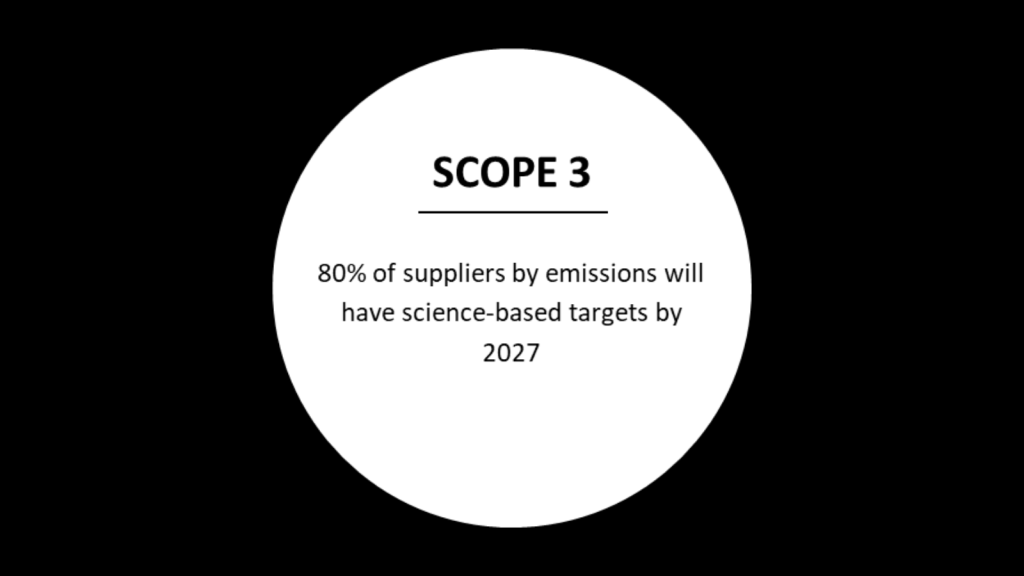
As part of our parent group, we have adopted SBTi (Science -Based Targets initiative) approved targets that include scopes 1, 2 and 3 emissions and our net zero strategy. Due to the scale of our business, our targets include both absolute reduction targets and engagement targets, working across our supply chain to ensure our largest suppliers set ambitious carbon reduction targets of their own.

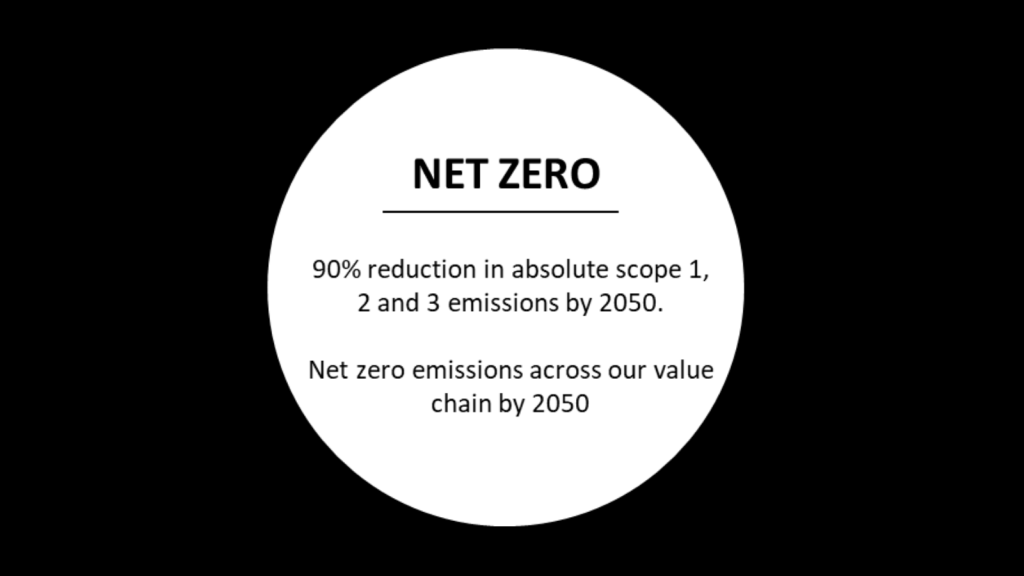
We are committed to the SBTi framework. In the framework, it is best practice to minimise GHG emissions before offsetting any residual emissions. We aim to reduce 90% of GHG emissions before using accredited carbon offsetting schemes to neutralise up to 10% of residual emissions. We will not offset emissions now or in higher quantities than this to claim we are carbon neutral, as it is not best practice to do so.

Although there are a few variations of the mitigation hierarchy, the principle remains the same. We take the following approach, Avoid, Minimise, Restoration, Offset.
Measures taken to avoid creating impacts in the first place, such as using renewable energy sources, technical product design to remove complexity or product engineering to offer weight reduction.
Measures taken to reduce the duration, intensity and/or extent of impacts that cannot be completely avoided. This can be achieved through pallet configuration and consolidated deliveries.
Explore how to restore degraded ecosystems following exposure to impacts that cannot be completely avoided or minimised.
Only after taking the necessary steps within the mitigation hierarchy will we consider the offset of residual emissions. In line with SBTi best practice framework, we aim to reduce 90% of GHG emissions before using accredited carbon offsetting schemes to neutralise up to 10% of residual emissions.